
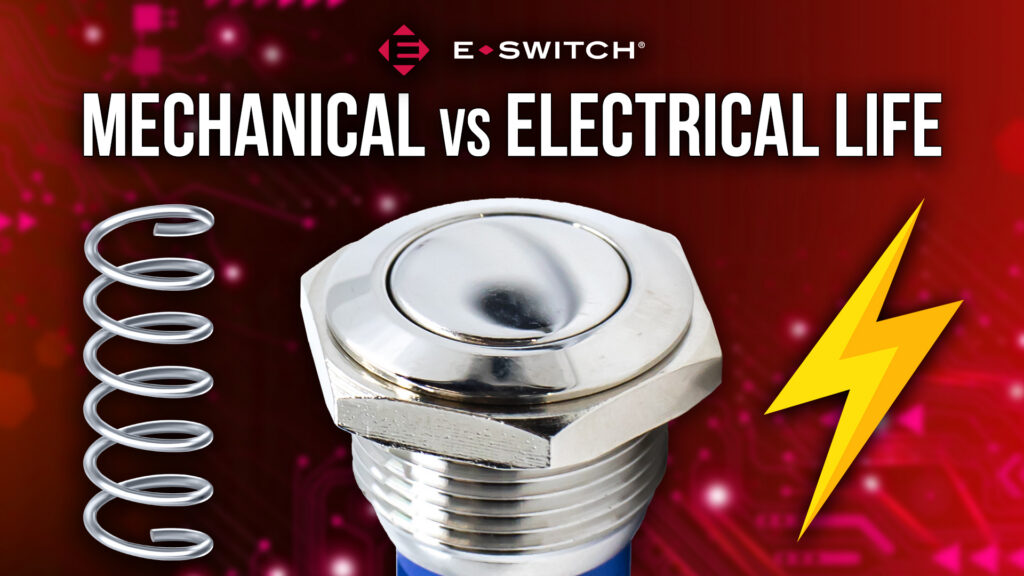
When selecting an electro-mechanical switch, two of the most important reliability specifications are mechanical life and electrical life. Understanding the difference can help ensure long-term performance in your application.
What Is Mechanical Life?
Mechanical life refers to the number of operating cycles a switch can perform without an electrical load applied. This specification measures the durability of the switch’s physical components, including springs, contacts, actuators, and internal mechanisms. Over time, repeated actuation causes wear, fatigue, and mechanical degradation.
Think of mechanical life as a measure of how many times a switch can be pressed, toggled, or actuated before its moving parts begin to fail.
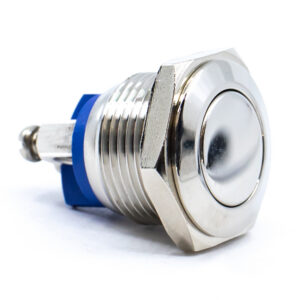
For example, the PV2 Series anti-vandal switch is rated for a mechanical life of 1,000,000 cycles, demonstrating the expected durability of its physical mechanism.
What Is Electrical Life?
Electrical life measures the number of operating cycles a switch can perform while switching its rated electrical load. When contacts open or close under load, electrical arcing can occur. These small arcs gradually erode contact surfaces, increasing resistance, and eventually leading to switch failure. As a result, electrical life is typically lower than mechanical life.
Circling back to the PV2 Series, the electrical life is rated at 200,000 cycles, significantly lower than its mechanical life because contact wear occurs when current is being switched.
Why the Difference Matters
The gap between mechanical and electrical life can vary widely depending on switch design and operating conditions. Applications with frequent switching of higher currents place greater stress on contacts and can shorten electrical life. Conversely, low-power signal applications may allow a switch to approach its mechanical-life limit before electrical wear becomes a concern.
Choosing the Right Switch
When evaluating switches, consider both specifications together:
- High-use interfaces may require a long mechanical life.
- Power-switching applications should prioritize electrical life and load ratings.
- Low-current applications benefit from specialized contact materials and higher electrical-life ratings.
E-Switch offers a broad portfolio of pushbutton, toggle, rocker, tact, and anti-vandal switches with varying life-cycle ratings to meet application requirements across industrial, medical, telecommunications, and consumer markets.
